

Webinar: Communicating with Impact: Delivering Better Outcomes for Vulnerable Customers
.png)
.png)
.avif)

.avif)

A communication being delivered doesn’t mean it worked
A letter arrives.
An email is opened.
An SMS reaches the right phone.
Useful measures, certainly. But they don’t prove the customer understood the message, knew what mattered or could take the next step.
That distinction matters for every customer. It matters even more when someone is under financial or emotional pressure, dealing with poor health, facing a major life event or struggling with low confidence.
Vulnerability is not always recorded. It can be hidden, temporary or triggered by a sudden change in someone’s circumstances. Designing communications only around disclosed needs will always leave gaps.
The better question is not simply, “Did we send it?”
It is, “Did the customer have a fair opportunity to receive it, understand it and act?”
Why important messages still fail
When someone is under pressure, their ability to take in information and make decisions can reduce.
A dense or threatening message may make matters worse. The customer avoids it, misses the required action and faces greater pressure when the next communication arrives.
From the organisation’s point of view, the account shows no response.
From the customer’s side, the problem may be confusion, fear or not knowing where to begin.
This doesn’t mean assuming vulnerability every time someone misses a payment or fails to respond. It means recognising that the organisation may not know the full story, then designing communications that reduce avoidable harm.
A practical way to review customer communications
During our recent webinar with the Credit Services Association, we introduced the CLEAR framework.
CLEAR is a practical way to review the whole customer journey, rather than focusing only on the wording of one letter, email or SMS.
Consider the customer
What’s happening in the customer’s world?
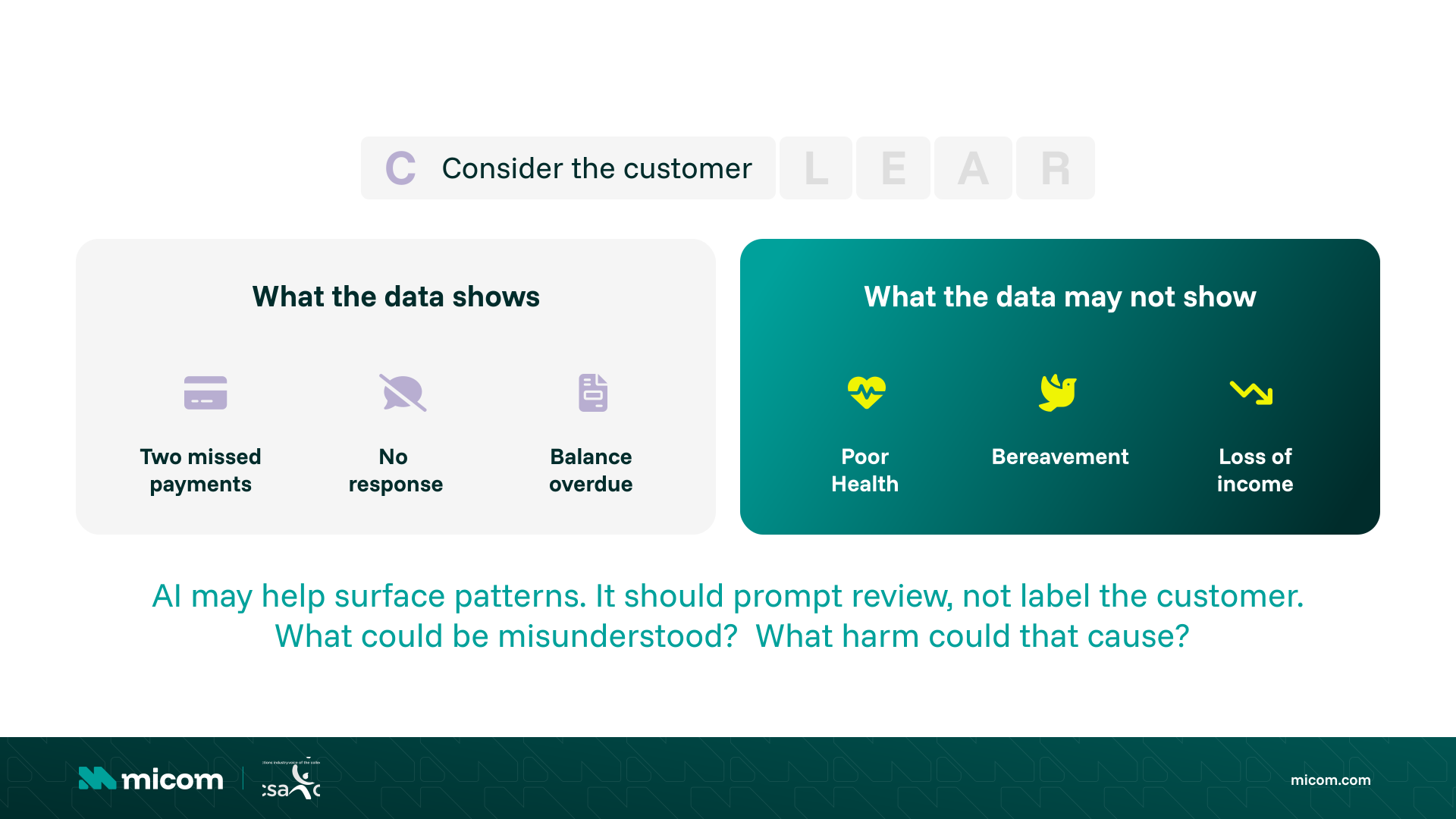
Customer records tell you what has happened.
Two missed payments. No reply. An overdue balance.
They rarely explain why.
Poor health, bereavement or a loss of income may sit behind that behaviour. Or it may be something else entirely. The aim is not to guess or diagnose the customer’s circumstances.
Instead, ask:
- What could they misunderstand?
- What harm could that misunderstanding cause?
- Would this communication still feel fair and clear if an unrecorded support need existed?
Data may highlight a pattern worth reviewing. It should not be treated as a complete explanation of the person behind it.
Lower the mental load
Is the message easy to understand?
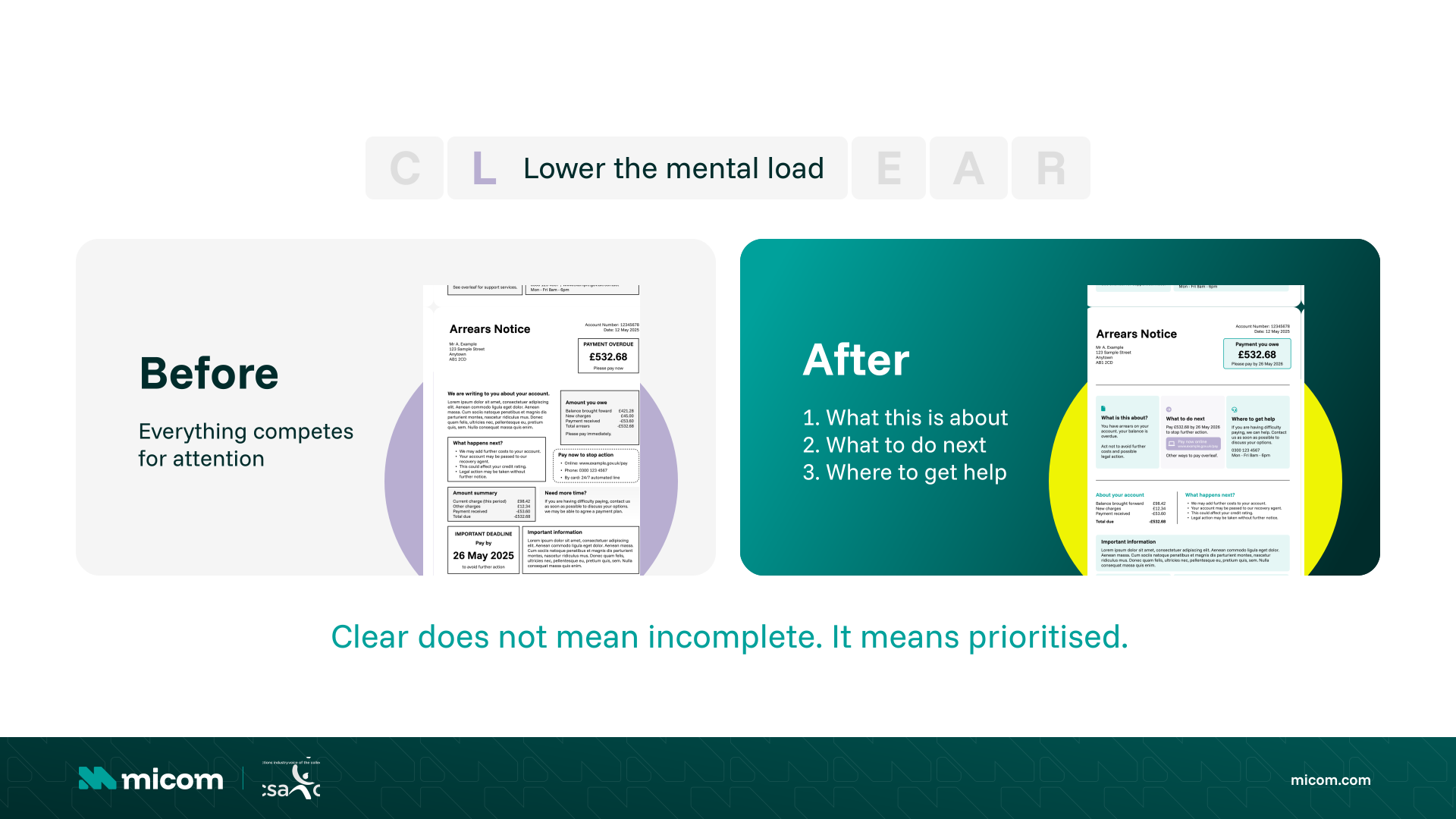
Lowering the mental load does not mean stripping out important legal or operational detail.
It means deciding what the customer needs to understand first.
A useful hierarchy is:
- What this is about
- What to do next
- Where to get help
If someone needs to pay £50 by Friday, make that easy to find. Don’t bury it halfway down the second page.
Try giving the communication to someone outside the team that wrote it. Ask them what it means and what they would do next.
A pause usually tells you something.
Clear does not mean incomplete. It means prioritised.
Enable access and action
Can they access the information and take the next step?
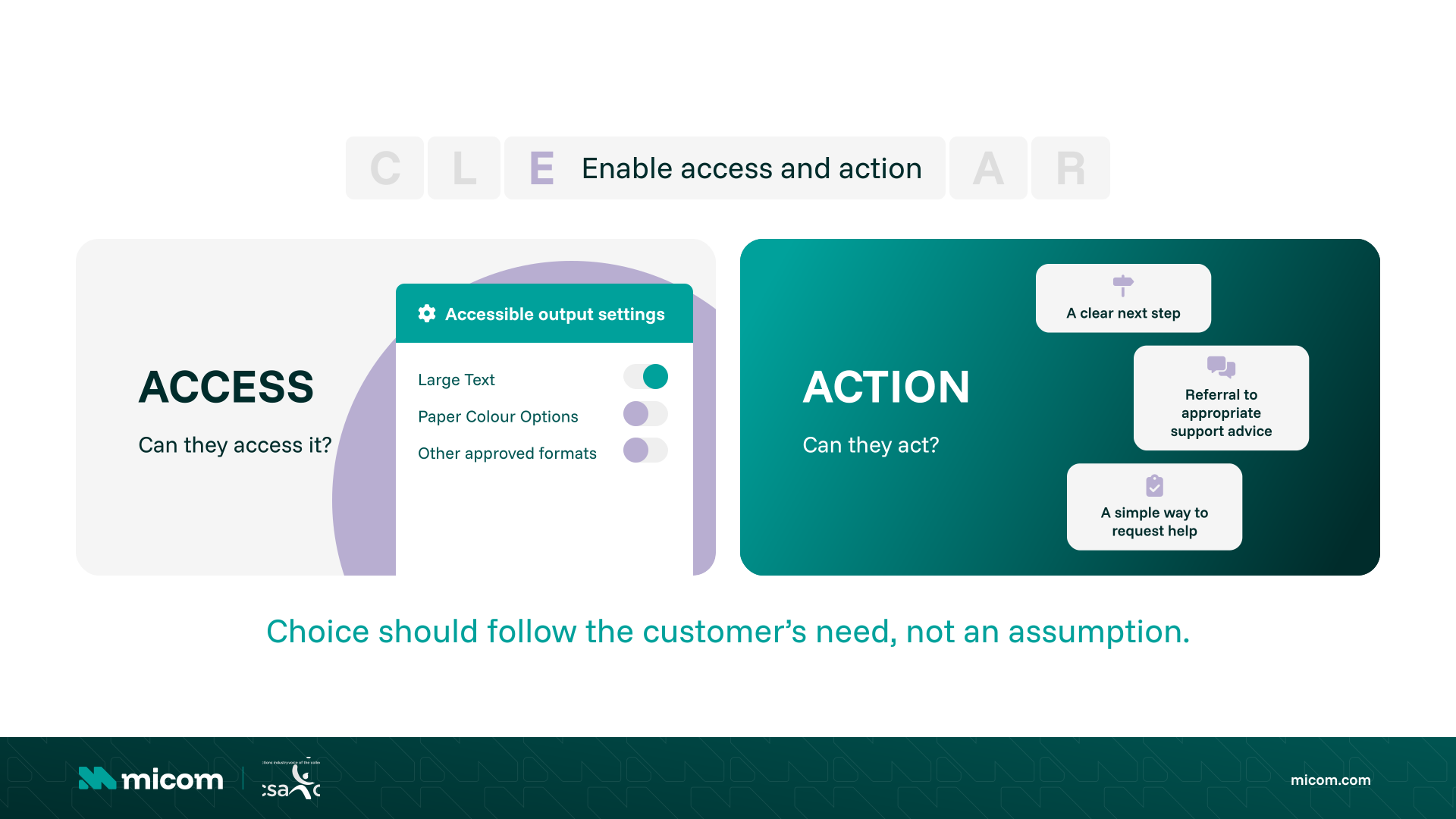
Accessibility has two parts.
First, can the customer receive the information in a format that works for them?
That might mean large text, a requested paper colour or another suitable format. The right choice should follow the customer’s stated need, not an assumption about a condition.
Then comes action.
Can they find the next step? Are links and contact details accurate? Is there a simple route to request help? Can they reach a person when self-service is not enough?
Open the communication on your phone. Follow the links. Try completing the action yourself.
Count the steps.
The customer should not have to overcome a second problem just to respond to the first.
Align channel and timing
Are we using the right communication channel?
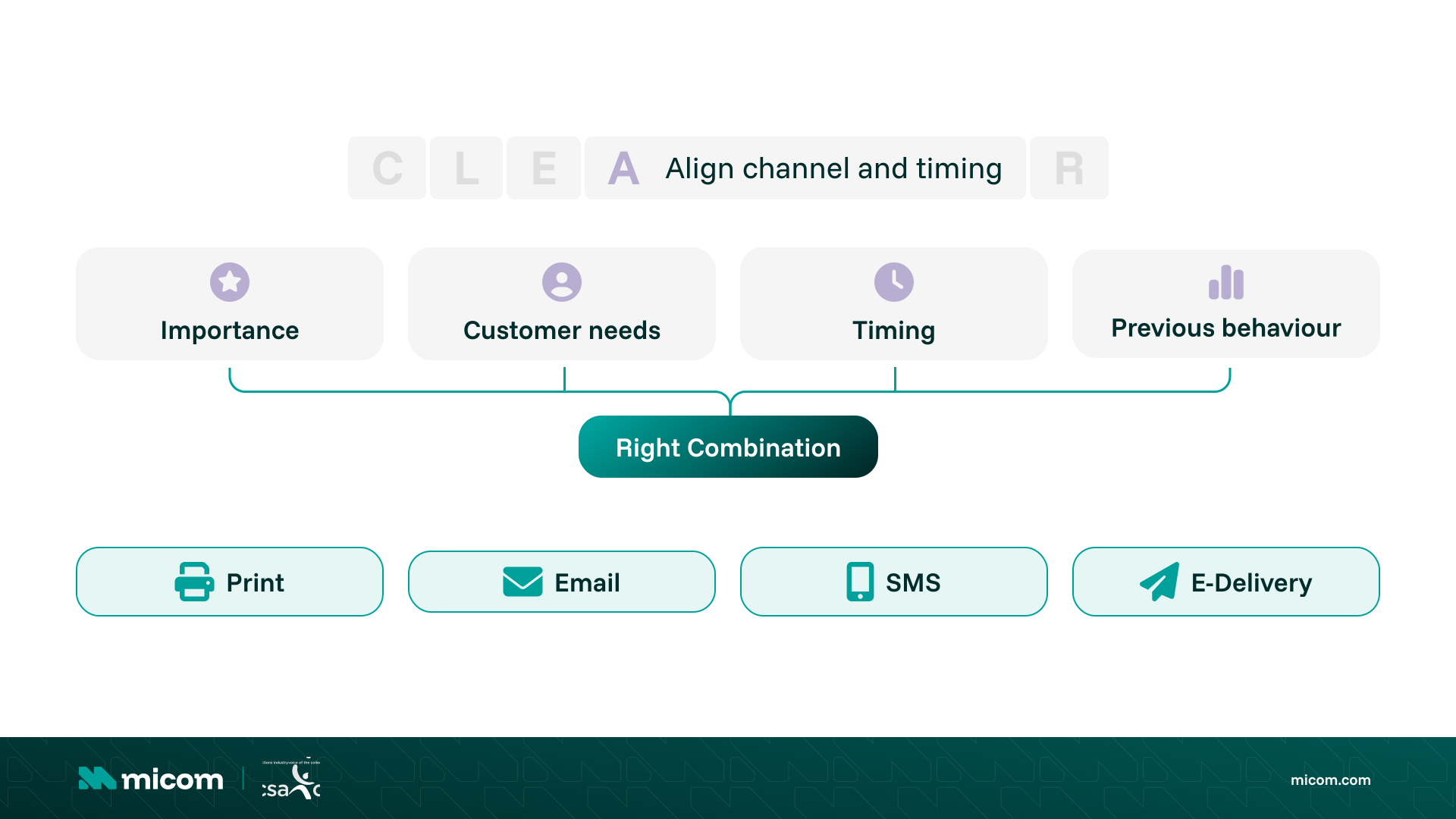
There is no universal hierarchy where digital is always better than print, or print is always more dependable than digital.
The right route depends on the importance and complexity of the message, the customer’s needs, the timing and what has worked before.
A secure digital communication may provide speed and visibility. SMS can work well as a prompt. Email offers convenient access. Physical mail gives the customer something permanent that can remain visible in the home.
Sometimes one channel is enough.
Often, the better answer is a planned combination where each channel has a clear job.
The choice should be driven by the outcome you need, not by whichever system is easiest for the organisation to use.
Respond to behaviour
How do we know the communication actually worked?
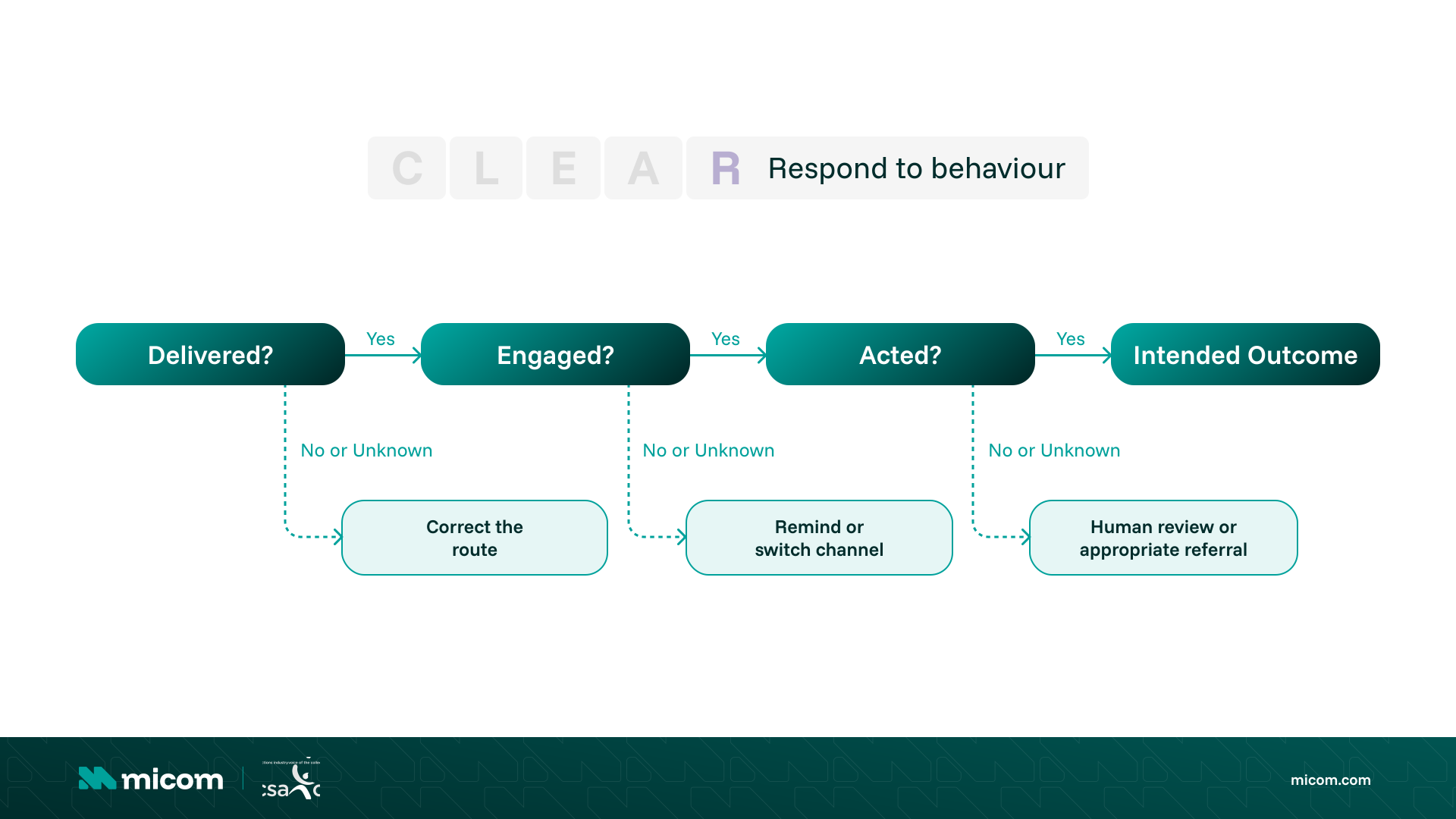
Silence is a signal, not an outcome.
Start with three questions:
- Was it delivered?
- Did the customer engage?
- Did they act?
The available evidence will vary by channel. A digital interaction may provide engagement data that physical mail cannot. That limitation needs to be recognised rather than ignored.
The response should also be planned before the first message is sent.
An undelivered message may require corrected details. A delivered but unopened message might lead to a reminder or a switch of channel. A customer who engages but does not act may need clearer support or human follow-up.
What should not happen by default is no response leading automatically to a stronger version of the same letter.
Try CLEAR on a real communication
Choose one live letter, email, SMS or customer journey.
Bring together the people who own different parts of it. That could include customer service, operations, compliance and communications.
Then ask:
- What might we be missing about the customer?
- Can the purpose and first step be understood within a few seconds?
- Is support as easy to find as the action we are asking them to take?
- Can the customer access the message and complete the next step without friction?
- Does the channel suit the urgency, complexity and importance of the communication?
- What happens if the message is missed, undelivered or not acted upon?
- Are the outcomes used to improve the next communication?
The CLEAR Communication Review turns these questions into a practical 15-minute check, with each section scored and the three most important improvements agreed at the end.
Watch the webinar
The full session, Communicating with Impact: Delivering Better Outcomes for Vulnerable Customers, explores the framework in more detail and shows how the five checks work together across one customer journey.
It also looks at how accessible outputs, physical and digital channels, engagement evidence and planned follow-up can help organisations put these decisions into practice consistently.
Watch the webinar on demand:
https://www.csa-uk.com/communicating-with-impact-delivering-better-outcomes-for-vulnerable-customers
Download the framwork for Free (no information required)
https://www.micom.com/clear-framework
Related posts


.svg)